What Natural Burial can Look Like: Maria's Story

April 28, 2026

What a Natural Burial Can Look Like: Maria’s Story

Maria’s natural burial story began while working as a nanny for a Jewish family. During that time, they shared the simplicity and beauty of Jewish burial with Maria - the natural processes, the direct return to the earth. Maria was deeply influenced by the direct return to earth and wanted this for herself, as she believed God intended. 


Although Maria wasn’t Jewish, and wouldn’t be buried in a Jewish cemetery, when the time came, her family honored that inspiration by choosing a natural burial. Braeden of LifeSource, who provides green burial services,  and Jill Shock of Death Doula L.A. worked with Maria’s family to create a beautiful celebration and later natural burial at Creston Cemetery in California.

What is Natural Burial

Natural burial allows the body to return to the earth within natural cycles, meaning the body returns without embalming chemicals, so all of the elements of a body are fully returned to nature, on nature’s timeline.


Current conventional burials may include embalming, expensive and elaborate lacquered hardwood or metal caskets, stone markers, and concretee, metal, or plastic burial vaults (aka outer burial containers.). All of these elements remain far beyond natural timelines.  and prevent the body from reintegrating with the soil.

In contrast, natural burials: 

  • Do not use embalming
  • use biodegradable caskets or shrouds
  • occur in natural or conservation-focused cemetery, or section of a cemetery dedicated to natural burials 
  • have more simplified markers 
  • place graves in the active soil layer - which is about 3 feet- where soil is biologically active.


While there are certifying organizations like the Green Burial Council and the Conservation Burial Alliance, not all natural burial cemeteries are officially certified as such, but still may follow the same principles overall. 


Maria’s burial was natural because: 

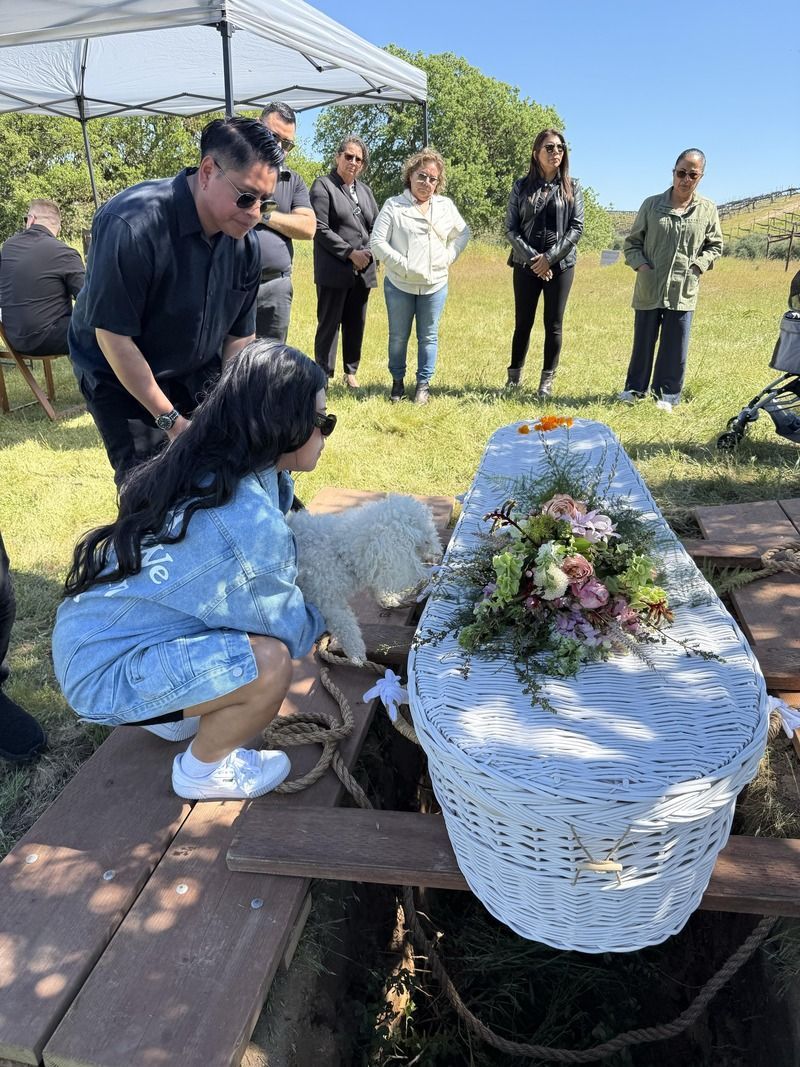
  • Biodegradable Casket: her family chose a white wicker casket, painted with nontoxic paint. 
  • No Embalming: Maria’s body was not embalmed, so her body will fully return to nature. 
  • No concrete burial vault was used.

Natural Burial and Customization

Unlike conventional funerals, which often follow a set structure, natural burials inherently allow for flexibility and intention. 


Families can choose:

  • the type of casket or shroud
  • the location and setting
  • the level of ceremony (or simplicity)
  • who participates, and how
  • Honor or participate in any religious, spiritual or cultural practices 


Prior to the burial , the family held a closed-casket traditional funeral service for those that could not make the drive to the Creston cemetery. 

The graveside service was by Jill Schock, and Maria's niece, who offered and encouraged the community to speak about Maria. Along with the help of Jill, children of the family were given space and gentle encouragement to share their thoughts and feelings as well- and this is just not as not common in conventional funeral settings. Involving children in the bereavement process helps them process loss as well.

Participation in Natural Burials

Traditional funerals are often led by professionals that don’t allow for involvement from family members, aside from the opportunity to say a few words. Natural burial can invite something deeper: a way for families to participate, connect, and honor life in a more hands-on, cathartic, and meaningful way. 


In Maria’s funeral, family members of all ages contributed, at nearly every stage.


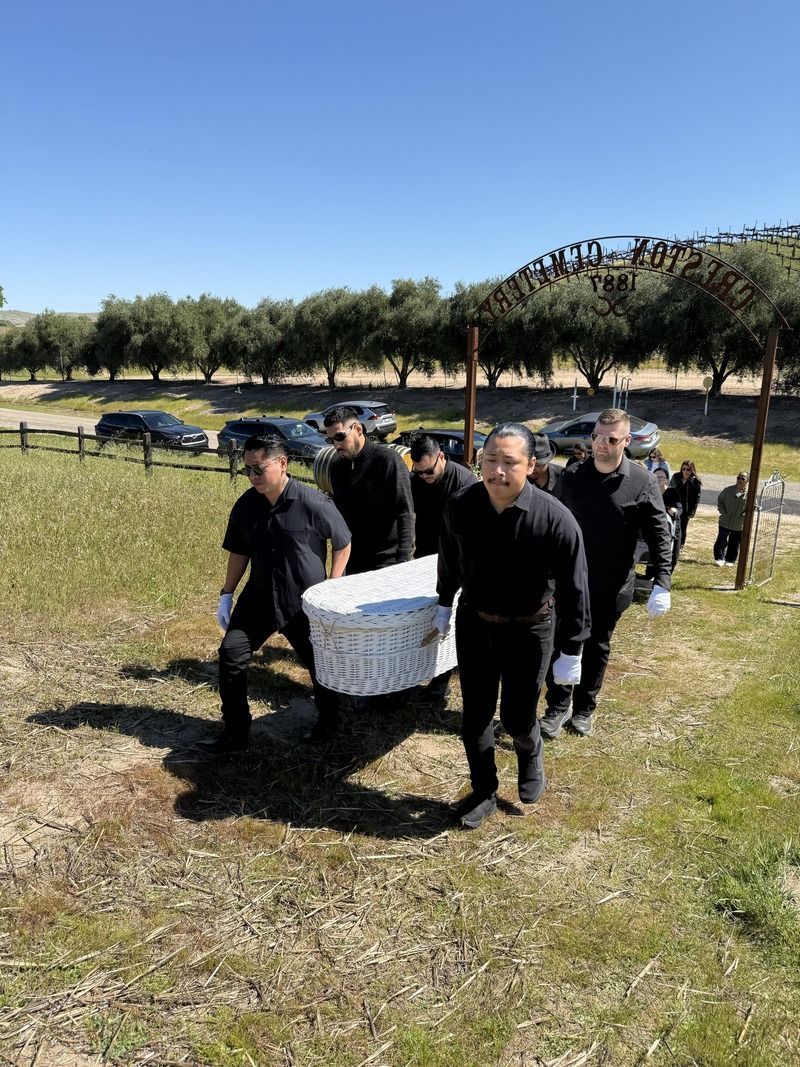
Maria’s family carried her casket to her gravesite and placed the casket above the grave.
People carrying a white box through a grassy field with trees and parked cars in the background

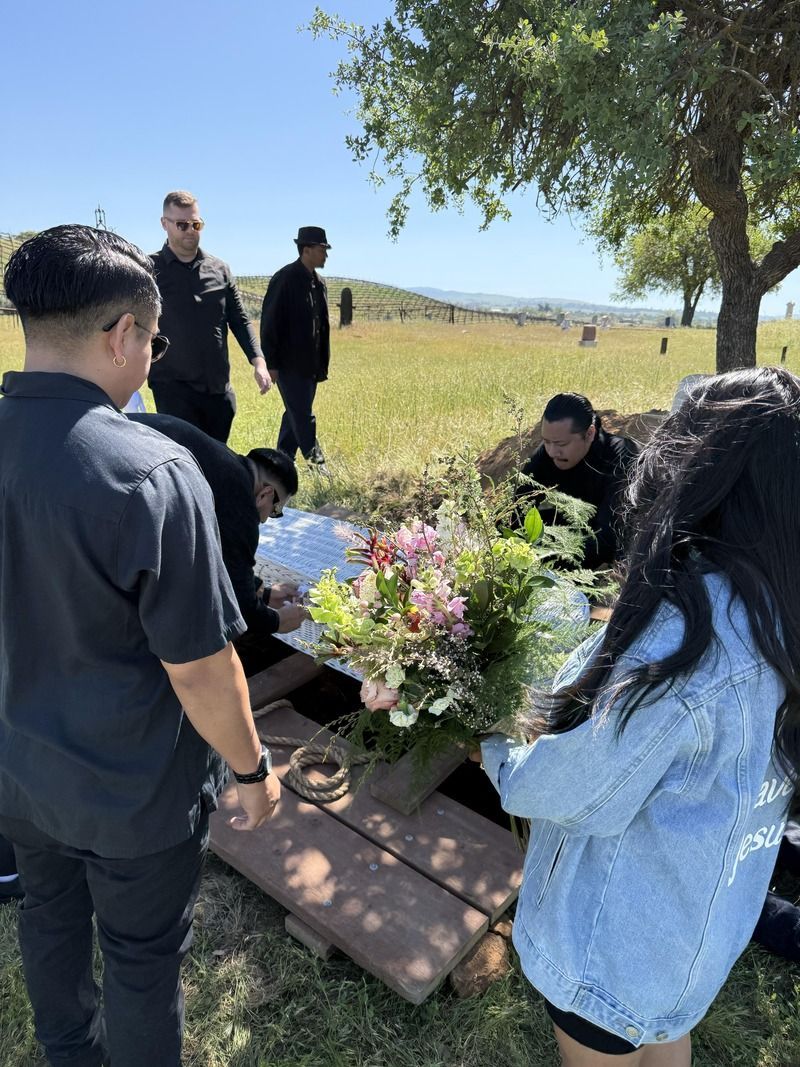
Family members placed flowers on the casket.
People gathered outdoors around a small memorial with flowers near a bench and tree in a grassy field.

Maria’s dog was brought along to the graveside as well to say goodbye- healing for the family, and even the dog too- as animals experience loss and grief as well. 
Mourners gather by a white casket with flowers at an outdoor graveside service.

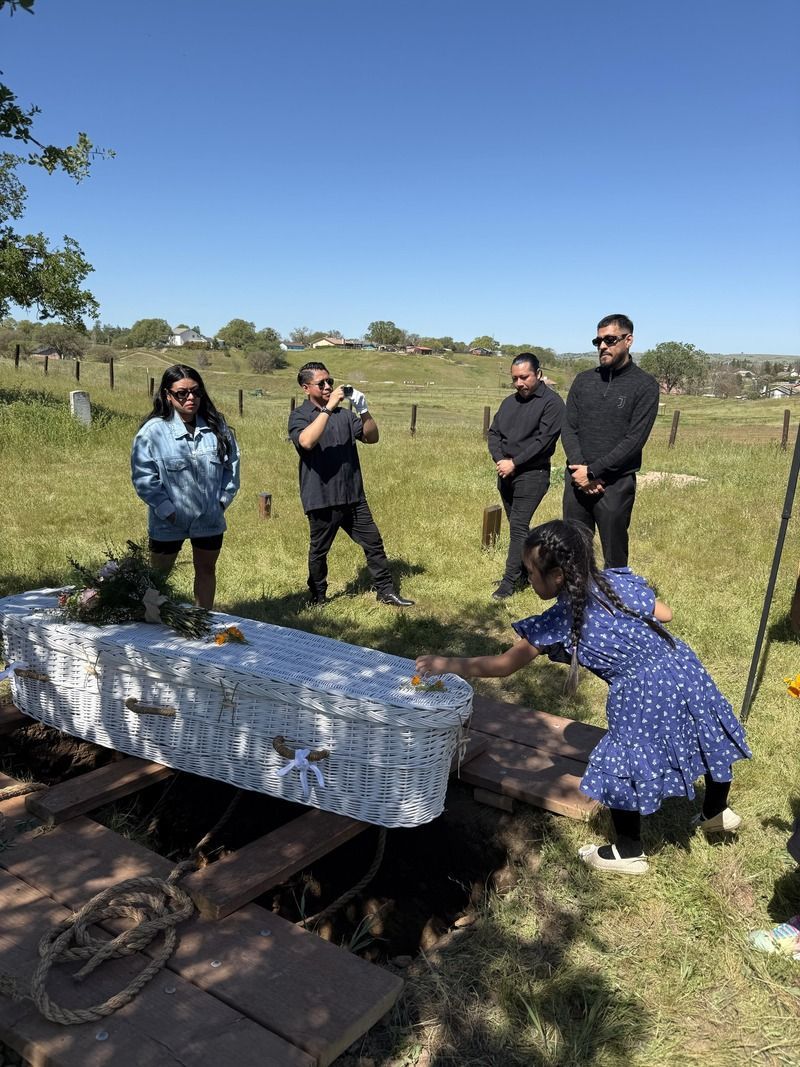
Children placed flowers onto her casket- connecting them to the experience.
People inspecting a large white object in a grassy field near a fence under a clear blue sky

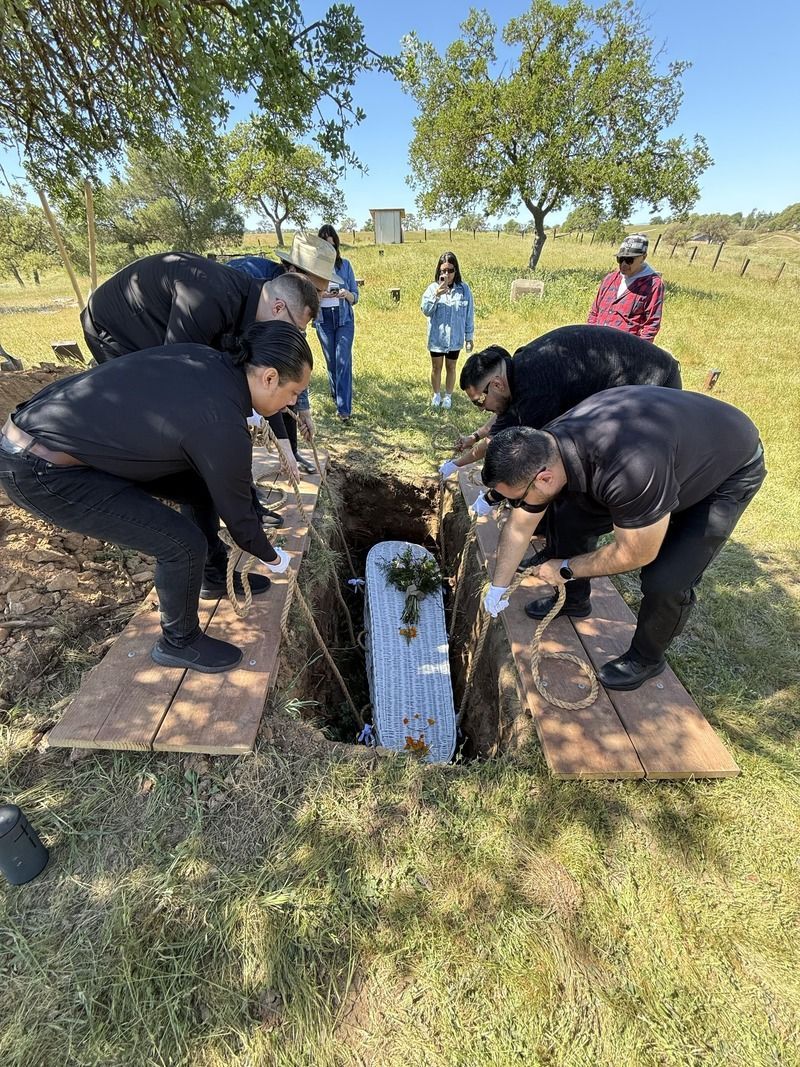
Family members lowered Maria’s casket into the grave.
People crouch over a narrow stream outdoors, placing a board across it on a grassy field.

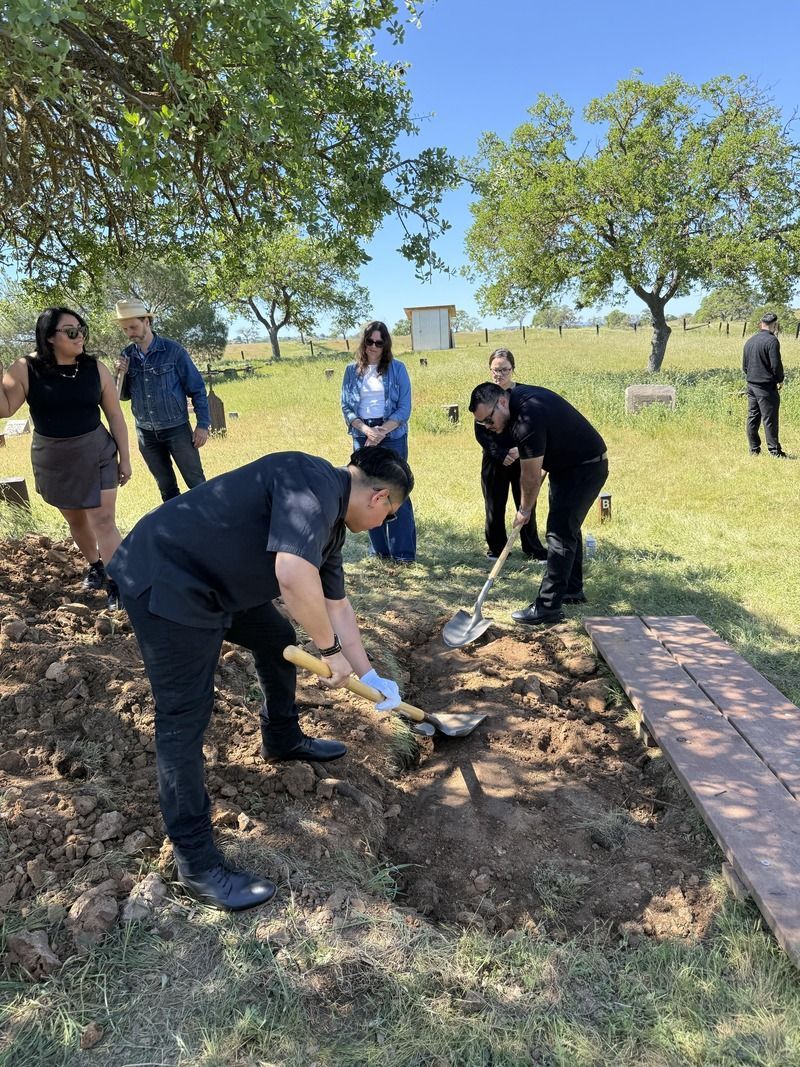
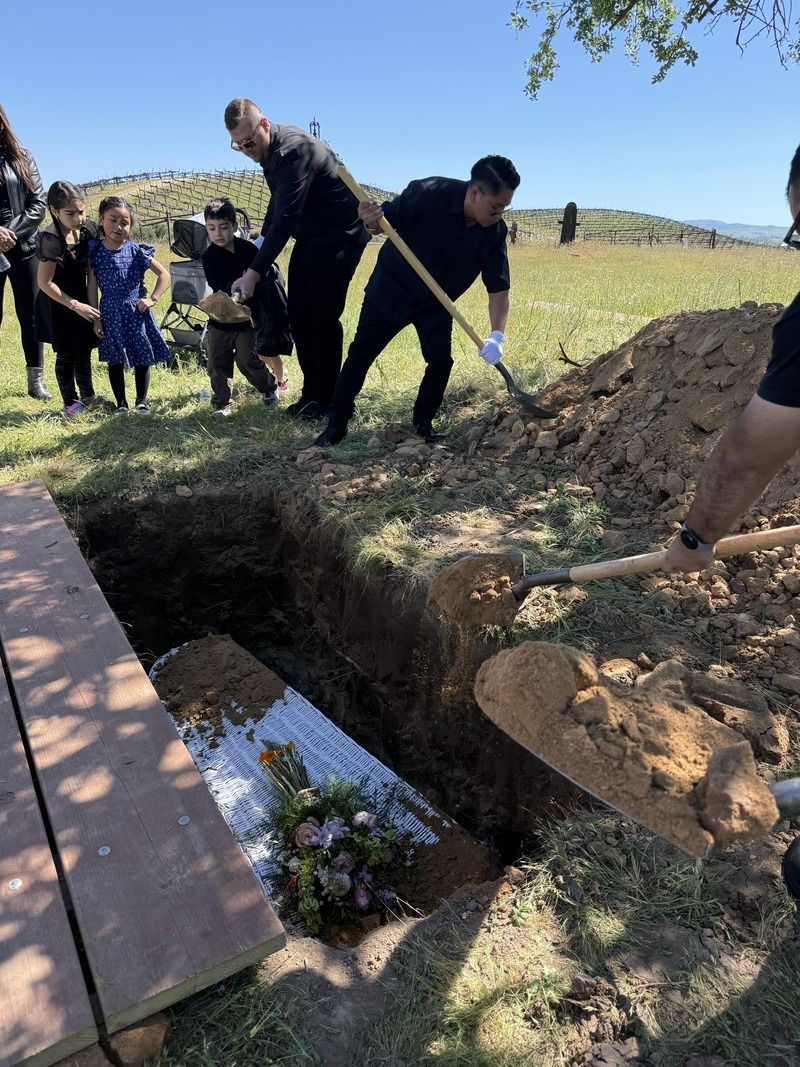
Family members not only ceremoniously placed dirt into the grave, but fully filled the grave. 
Mourners lower a coffin into a grave at a graveside burial outdoors.
People planting a tree outdoors in a grassy park on a sunny day

Maria’s funeral was a return to the earth, carried out by the hands of the people who loved her most.


Natural burial is legal everywhere, but availability varies by cemetery regulations and offerings. If you would like to explore natural burial in California, LifeSource is here to help- you can reach out here. 

November 4, 2026
If you’re learning about green burial and natural burial, you may wonder if there are any differences between these terms. In most contexts, they mean the same thing: returning the body to the earth using biodegradable materials, without conventional embalming or a burial vault. Both allow for a simple return to nature, allowing the body to become part of the living landscape once again. The language can become confusing because “Green Burial” is sometimes used broadly to describe other options such as terramation (aka human composting) and aquamation (aka water cremation) . When discussing eco-friendly options that do not involve burying a body, “Green Funerals” or “Green Death Care” are more accurate terms. What is Natural Burial Natural burial is the practice of allowing the body to decompose naturally in the earth. With minimal intervention, the body’s nutrients return to the earth through the work of naturally occurring decomposition. Though practices vary by cemetery, you’ll generally see natural and green burial outlined as: Avoiding conventional embalming or toxic preservation fluids. Forgoing vaults or concrete liners. Using caskets or shrouds made of renewable, natural, & biodegradable materials. Choosing simple natural markers that complement the landscape. The surrounding landscape may look different from a conventional cemetery, too. In some natural burial grounds, native grasses, wildflowers, and trees take the place of meticulously manicured lawns. A natural burial can take place in: An uncertified natural burial ground or cemetery. A Green Burial Council-certified cemetery. A hybrid cemetery- a conventional cemetery that allows natural burial in dedicated sections. Private property burial may also be an option in some locations, depending on state and local requirements. In California, in limited rural areas, a small private or family cemetery can be established through strict licensing and approvals. You can learn more about establishing a private cemetery here. Is Green Burial Different from Natural Burial? In most cases, no. Both terms describe a full-body burial that allows for natural decomposition in the earth. The use of the term “natural” emphasizes the process of returning to the earth with limited intervention, while “green” emphasizes environmental considerations. The priorities go hand in hand: simpler burial materials and fewer interventions allow for a more eco-friendly and direct return to the earth. The key distinction here is the word burial. Aquamation, Cremation, and Terramation are not forms of burial, but dispositions that reduce the body with an alkaline solution, fire, or natural decomposition. They transform the body in a controlled environment before returning the resulting remains to the earth. Cremation and aquamation produce remains from bones, commonly called “ashes”, while terramation produces “soil” or compost (you’ll also hear the term reduced remains- we cover this in this post about terramation terminology here ). Families may choose to bury or scatter these remains, but this is a separate step. With natural and green burial, the body’s transformation takes place within the earth. Green Burial and Green Death Care You’ll see that “green burial” is occasionally used interchangeably with “green death care”. However, green death care is an umbrella term for environmentally conscious funeral options, and green and natural burial fall underneath this umbrella. Aquamation and terramation are separate processes that can also fall within green death care. Think of green death care as a broad spectrum- caring for someone after death while considering the resources used, materials left behind, and the impact on the environment. Green death care can encompass both disposition choices and individual practices, including: Natural or green burial. Aquamation (water cremation). Terramation (human composting). Full-body burial at sea using appropriate biodegradable materials. Choosing simpler, biodegradable funeral products. Avoiding conventional embalming or choosing less toxic body-care options when preparation is desired. Reducing the environmental impact of conventional services through changes in materials, transportation, or energy use. Supporting carbon-offset projects. What Does Green Burial Certification Mean? The Green Burial Council has different certification standards for cemeteries, funeral homes and products. Certification provides a framework for evaluating specific practices and helping families understand what a provider offers. For cemetery certification, cemeteries undergo an evaluation and are scored based on outlined criteria. It is important to note that the Green Burial Council does not conduct compliance checks after initial certification. Certification can help families find providers and compare their practices. However, Green Burial Council certification is voluntary and not required to arrange a natural burial. An uncertified cemetery may still allow a burial that follows natural burial practices. See a beautiful example of a Los Angeles’ family’s experience of natural burial here . LifeSource had the honor of guiding this family in preparing a natural burial for their loved one, Maria. LifeSource had the honor of guiding this family in preparing a natural burial for their loved one, Maria. Her wishes were inspired by the simplicity of Jewish burial traditions and the meaning she found in returning directly to the earth. Her story illustrates how natural burial can reflect both personal beliefs and a connection to nature.  Considering Green or Natural Burial in Southern California? Whether you are planning ahead or caring for someone who has died, LifeSource can help you explore a return to the earth that reflects your values. Our team can explain natural burial arrangements, discuss available cemetery options, and help you understand each step. Exploring other paths? LifeSource offers the following dispositions: Terramation Aquamation Flame Cremation Burial at Sea Natural Burial (covered here)